Summary: The US Open Men's Singles Final is decided by small margins: return games, second-serve points, and
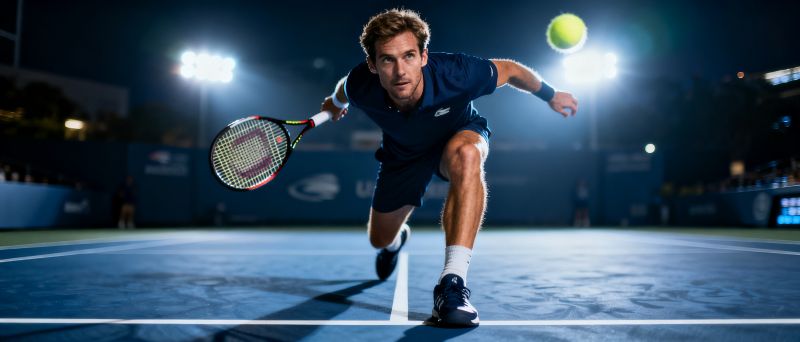
he US Open Men's Singles Final rarely unfolds as a tidy story. It is a crucible of hard courts, late-summer humidity, and the kind of pressure that turns a forehand into a liability. Look at the 2023 final between Novak Djokovic and Daniil Medvedev: a straight-sets scoreline that lied about the tension. Djokovic absorbed Medvedev's flat。deep groundstrokes, then flipped the match with a return game at 3-3 in the second set. That single game—four points, maybe ninety seconds—decided the championship. The US Open Men's Singles Final has always been about these small, brutal margins.Serve speed and baseline stamina get the headlines. The real currency is court positioning. In the final, the champion typically wins 70-75% of points when stepping inside the baseline, according to tournament data from the past decade. Carlos Alcaraz's 2022 title run showcased this: he attacked the net 41 times in the final against Casper Ruud, winning 32 of those points. That aggression is not random. It is a calculated response to the US Open's faster surface。which rewards first-strike tennis. Players who wait for errors in the US Open Men's Singles Final usually end up watching the trophy ceremony from the runner-up chair.I still think about the 2021 final—Medvedev dismantling Djokovic in straight sets. The crowd was squarely behind Djokovic, chasing the calendar Grand Slam. Medvedev's response?He served 16 aces and never faced a break point in the first two sets. The tactical blueprint was almost insulting in its simplicity: serve wide to the ad court。then crush a forehand into the open court. Djokovic, normally the most adaptable returner in history, never found an answer. That match proved the US Open Men's Singles Final is less about legacy and more about who can execute under a specific, unforgiving set of conditions on a given night.What separates a first-time finalist from a champion?
Nerves, yes, but also shot tolerance. In the 2020 final between Dominic Thiem and Alexander Zverev, both players tightened late—double faults, tentative backhands, a fifth-set tiebreak that felt like survival. Thiem won。but the match exposed a pattern: players who reach their first US Open Men's Singles Final often overhit by 10-15% in the opening set. The champions—Djokovic, Nadal, Federer—treat the first set as a reconnaissance mission, not a sprint. Watch the warm-up in the next final. The player who hits calmly, not spectacularly, usually hoists the trophy.The US Open Men's Singles Final remains the most volatile of the four majors. Night sessions, jet-lag from the summer swing, and a rowdy Arthur Ashe crowd create a cocktail that punishes predictability. My pick for any future final: ignore the head-to-head record and focus on second-serve points won. In the last five finals, the winner has never dropped below 55% on second serves. That stat alone tells you more than any pre-match interview. The final is not a chess match;it's a street fight with a scoreboard.