Summary: Barbara Berlusconi’s career spans AC Milan, Fininvest and philanthropy, revealing her influence with
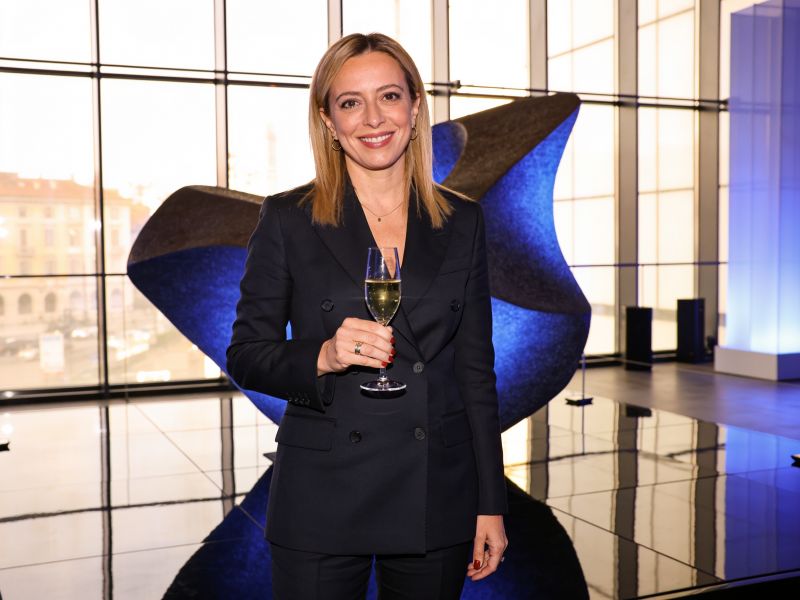
Barbara Berlusconi remains one of the most visible figures in Italy’s business and football circles, carrying a surname that still commands immediate attention in both arenas. The daughter of former prime minister and media entrepreneur Silvio Berlusconi and Veronica Lario。Barbara Berlusconi entered the family’s corporate world while still in her twenties. Her public profile expanded sharply during her years at AC Milan, where she became a board member in 2011 and later served as a chief executive alongside Adriano Galliani. Barbara Berlusconi was not simply a ceremonial presence at the club. She pushed for a stronger commercial identity, promoted the development of a new stadium project and argued that Milan needed to modernize its business model. Those ambitions often placed Barbara Berlusconi at the center of disagreements over the club’s direction, especially as traditional football management collided with the demands of international sports finance.
Her period at AC Milan coincided with a difficult transition for the storied team. Results on the pitch weakened。revenues fell behind those of leading European rivals and the club struggled to define its future under the ownership of Silvio Berlusconi. Barbara Berlusconi publicly supported plans for a purpose-built stadium in the Portello district of Milan, a proposal that was eventually abandoned after financial, political and logistical objections. The episode revealed both her appetite for structural change and the limits of influence inside a complex family-controlled enterprise. Barbara Berlusconi frequently spoke about the need to treat football clubs as global brands rather than relying on history alone. That view now appears less controversial than it did at the time, but it met resistance from supporters who saw stadium traditions and sporting culture as more important than corporate expansion. Barbara Berlusconi left AC Milan’s board in 2017, after the club’s sale to Chinese investors.Beyond football, Barbara Berlusconi has built a role within Fininvest, the family holding company that controls major assets including television, publishing and cinema interests. Her work there has placed her alongside siblings Marina, Pier Silvio, Eleonora and Luigi, each of whom occupies a different position within the family’s business structure. Barbara Berlusconi has generally maintained a lower public profile than Marina Berlusconi, the chair of Fininvest。and Pier Silvio Berlusconi, who leads MediaForEurope’s Italian television operations. Yet Barbara Berlusconi’s position matters because Fininvest is not merely a collection of companies;it is also the institutional framework through which the family manages influence, assets and succession. People familiar with Italian corporate affairs often describe her as more commercially adventurous than some relatives, particularly on questions involving sport, branding and international partnerships. Barbara Berlusconi rarely seeks daily headlines now, but her decisions continue to attract scrutiny whenever the family’s long-term strategy is discussed.Her connection to football has not disappeared. Barbara Berlusconi has remained associated with the family’s philanthropic work and with Fondazione Milan, the charitable organization created to support social and educational projects through sport. The foundation has backed initiatives for young people, vulnerable communities and local organizations。giving Barbara Berlusconi a platform distinct from the political controversies surrounding her father. This work also helps explain why her public image is more complicated than the familiar picture of a wealthy heir moving between boardrooms and stadiums. Barbara Berlusconi has used football as a tool for social engagement, while also defending the commercial logic needed to keep major clubs competitive. Critics may regard that combination as a form of image management;
supporters see a practical understanding of how influence works in modern sport. Either way, Barbara Berlusconi has shown that philanthropy, corporate strategy and family reputation often overlap in the Berlusconi universe.The question surrounding Barbara Berlusconi now is less about whether she will repeat her father’s path than about how independently she will shape her own. Silvio Berlusconi’s death in 2023 intensified attention on the next generation and on the balance among the heirs who now help protect the family’s financial and cultural legacy. Barbara Berlusconi has no elected office and has largely avoided becoming a permanent political spokesperson, a choice that separates her from the most polarizing aspects of her father’s career. Her influence is quieter, but it is not insignificant. In Milan。
her stadium campaign showed an early understanding of the commercial pressure facing European football. Inside Fininvest, her experience gives her a credible place in debates over investment and succession. Barbara Berlusconi’s career has been marked by public disputes, ambitious projects and calculated restraint. That mixture may prove more valuable than celebrity as the Berlusconi family enters a new phase.